The First Six Years of a Child: A Roadmap to Early Interventions
Rhea J
Psychologist
LAP Facilitator, Harlur
A child’s brain is a fascinating place to be in. Millions of stories, ideas and countless words are ready to pour out. During their first six years, a child’s brain forms millions of neural connections, shaping how they speak, think, walk, and even express their emotions.
As a parent, it’s a major milestone to watch your child take their first steps, say their first words, and cry for the first time, too! Uncertainties and worries about whether your child will reach their firsts and beyond often keep parents up all night; add to that the endless internet search, various opinions and “wait and see”, only adds to the pre-existing stress. That’s when early intervention comes in.
In simple terms, early intervention is the support children receive when they experience developmental delays or need additional assistance in development. Early interventions do not label or offer a fix but, in fact, work on providing them with holistic support, therapeutic tools and the right environment for growth. You must be wondering, but what exactly would I consider to be called early intervention? This broad term encompasses a large amount of assistance in different ways.
FOUNDATION
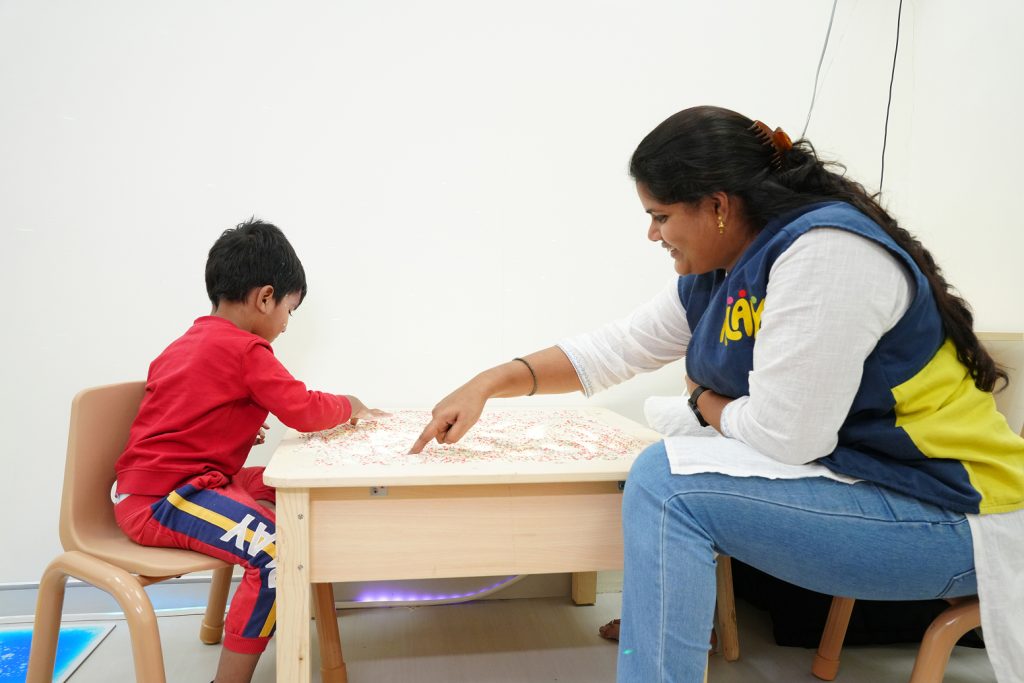
A child’s needs are understood through the initial steps of detailed screenings/assessments performed by the Clinical Assessor/Parent counsellor/therapists. They observe, screen, assess and perform comprehensive tests to identify the strengths, understand how the child processes their sensory needs, and create a map of how each of the below-mentioned therapies would fit best for the child.
CORE TEAM
Speech Therapists –
What would your first impression of a speech therapist be? Perhaps that they work very closely with children to help them talk. Making them vocal is only a small part of what a speech therapist does. Language begins when a child can think, understand and express themselves. Furthermore, language in itself is broad and is divided into receptive and expressive domains, both important for the child. In speech therapy, even when a child expresses themselves in any form or way, such as non-verbal cues or body gestures, that’s a success for the therapist. A therapist here opens up a wide range of forms of expression for the child, demonstrating again that communication doesn’t just come in the form of words. And that’s not it; our speech therapists also go beyond communication and work with children to assist them if they have difficulties with chewing, biting or eating. To sum this up, speech therapists are the specialists that bridge the gap between the imagination and the child’s ability to share it with the world.
Occupational Therapists
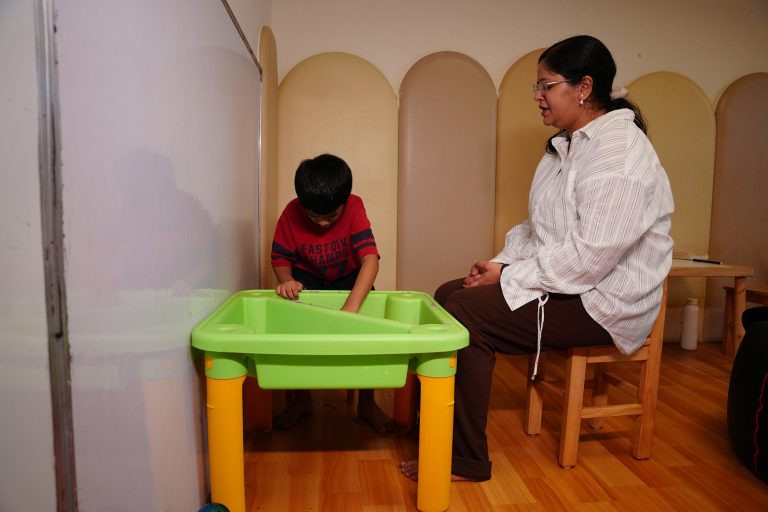
Occupational therapists are some of the most underrated superheroes. More so because we would all wonder what occupation a child would have, but for a child, their occupations pertain towards doing generic yet very essential tasks such as eating, walking, jumping, crawling, and being able to function in various environments. An occupational therapist helps children work through their sensory needs such as vestibular, auditory, olfactory, visual and proprioceptive. While these may sound like complicated terms, they consist of the child’s sensory parts that often go unnoticed, such as the ability to balance, expressing their needs (hunger, thirst), as well as body awareness. When a child is unable to process their sensory needs, day-to-day activities like these may become overwhelming for them. An occupational therapist uses personalised child-based strategies to work on their fine motor coordination, sensory needs and to also make a child aware of how they can self-regulate to avoid big feelings.
Behavioural Therapists –
Behavioural therapies are less about children acting out and more about helping them manage their overwhelming emotions, their inability to express themselves, and unmet sensory needs. Therapists here work with children in managing their triggers, building social interactions, and helping children understand turn-taking and sharing, and, importantly, working through their big feelings such as anger. The effectiveness of behavioural therapy is also backed up by longitudinal data provided by the National Institute of Child Health and Human Development, stating that early behavioural interventions assist children in developing self-regulation tools and increase the rates of peer interactions in mainstream schools. Beyond the notion that behavioural therapies are required only for children who have meltdowns, there is so much more. It bridges the gap between the ability to calm themselves and to effectively build emotion management skills for themselves.
Special educators/Psychologists as Facilitators
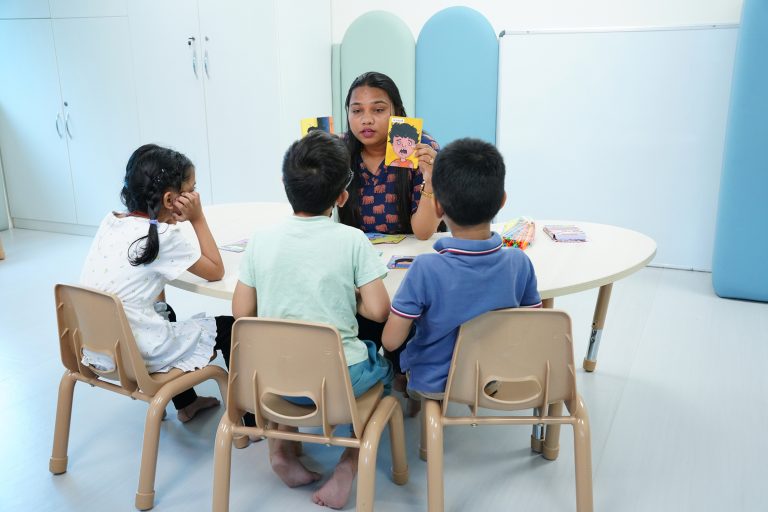
Special educators are professionals who are trained in tailoring and building individual learning and growth-specific plans for the child. They go beyond the one-plan-fits-all idea and strategically work differently with each child, with the end goal being quite similar- to give the child the best. They go beyond working on book-based academics to seeing the world, being independent in adaptive skills, as well as cognitive development. The holistic learning is backed by play-based strategies, visual learning and interactive classroom settings. In simple terms, special educators bridge the gap between therapies and formal classroom settings.
Each child is unique, and while every child takes their own time to grow and develop, the first few years pave the way for their development and support, which assists them in building a stronger foundation for the future. There are more than one million neural connections forming every second in a child’s brain as we read this, which makes us wonder how a little support can wire them in beautiful ways. Early intervention is not equivalent to labelling a child but infact supports to prevent any delays that could be a hurdle for them.
KOVE AT KLAY – TAKE THE NEXT STEP WITH US
KOVE at Klay works towards building a compassionate space for a child to thrive. With in-house therapists, facilitators and experts specifically tailoring their plans according to the child’s needs, KOVE creates an integrated team to cater to your child under one roof. If you would like to know more about our services, therapies offered and assessments, reach out to us and we would be happy to help. Schedule a consultation and take the first step towards helping your child reach their full potential in a safe and nurturing environment.